Beauty advertising in the last few years has been innovative and fresh. Brands moved away from overly polished, studio-perfect videos and leaned into ideas that felt fun or had a storyline to them. Some used humor, some used bold visuals, and others relied on honest product storytelling. What they shared was a clear angle executed well. Here are a few beauty ads that stood out this year so you can study them for your ads in 2026.
Maybelline Sky High Mascara
Maybelline takes the “sky high” promise and turns it into the whole visual concept. The ad shows a sky-diving, above-the-city world to make the idea of extreme lash lift feel immediate instead of just another claim on a package.
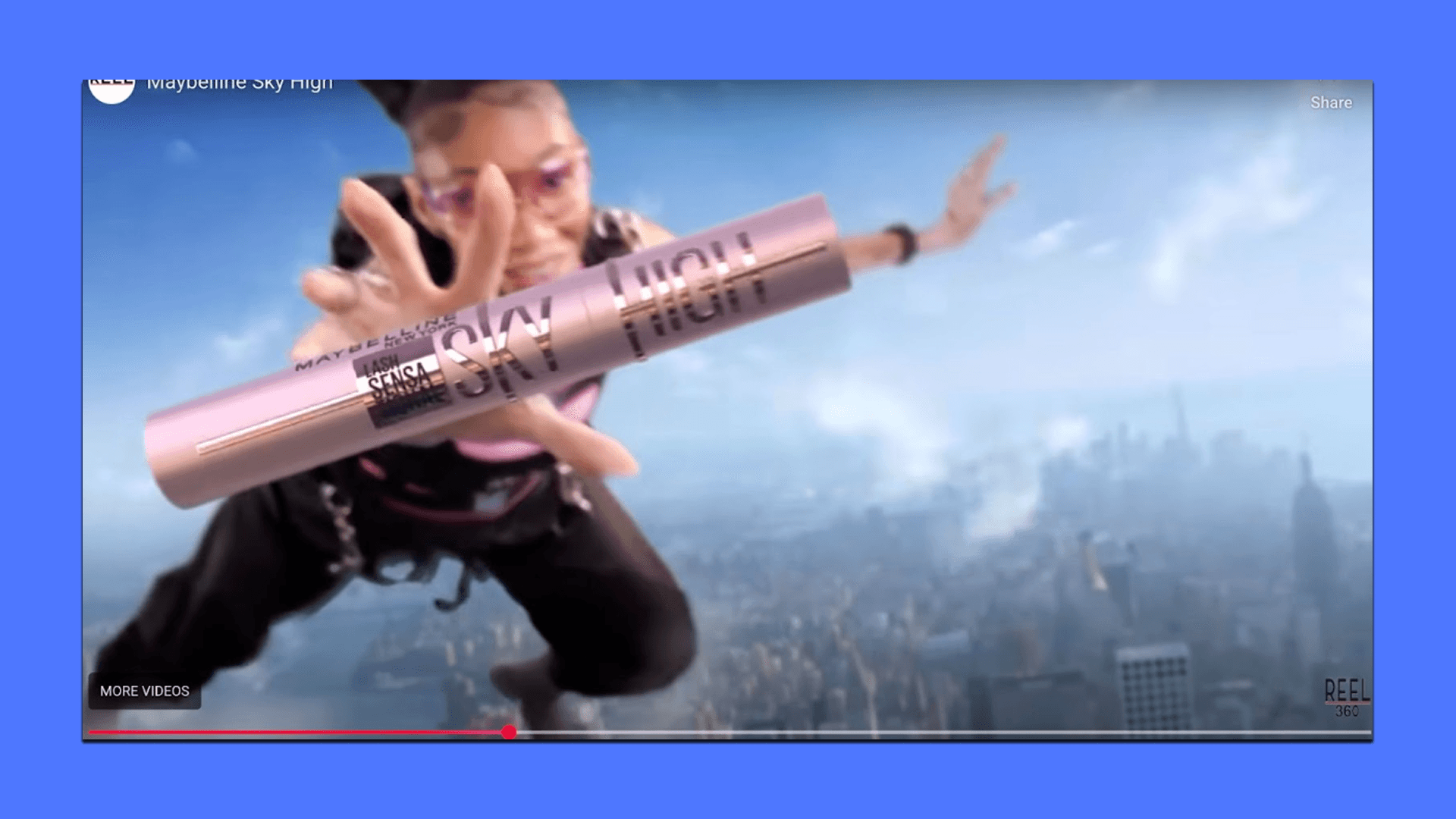
You still get the essential close-up of the eye — the part every mascara ad needs — but the surrounding action gives it more personality than the usual studio setup.
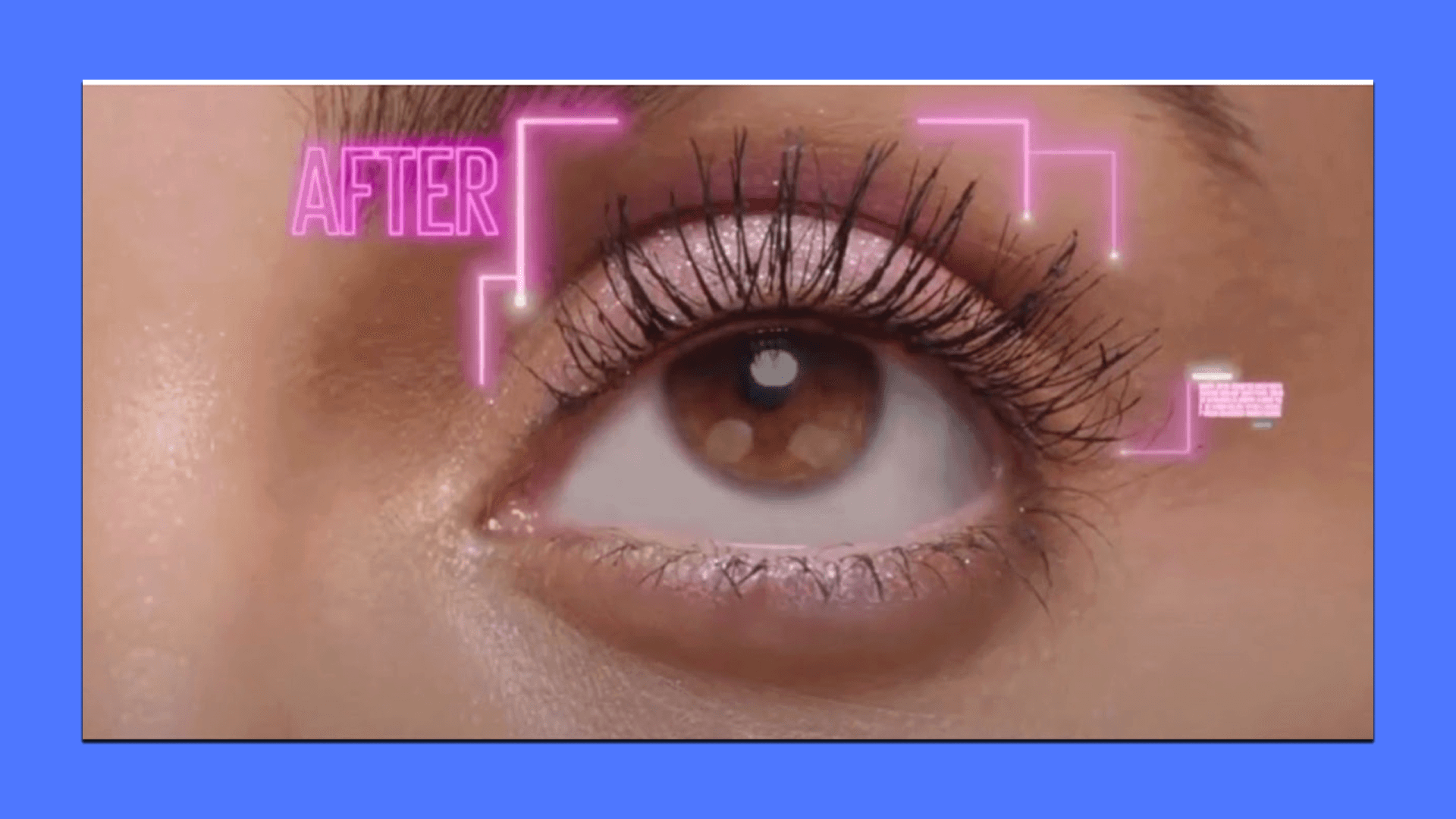
The theme is simple: height, lift, motion. Everything in the spot supports that. Fast transitions, neon outlines, and the tube flying through the air all reinforce the same message in different ways. It keeps the viewer engaged while making the benefit easy to remember.
This is a good example of how beauty brands can take a functional promise and build a clear visual hook around it. The ad doesn’t need a complicated story. It just shows the effect in a way that feels fun.
Glossier Subway Takeover
What makes this work is how understated it is. There’s no giant product shot shouting for attention. Just small phrases like “Happy is cool” and simple icons that match Glossier’s friendly, approachable tone. It feels more like a gentle nudge than a hard sell.
The placement also makes sense for their audience: commuters, students, young professionals — people who live online but move through these stations every day.
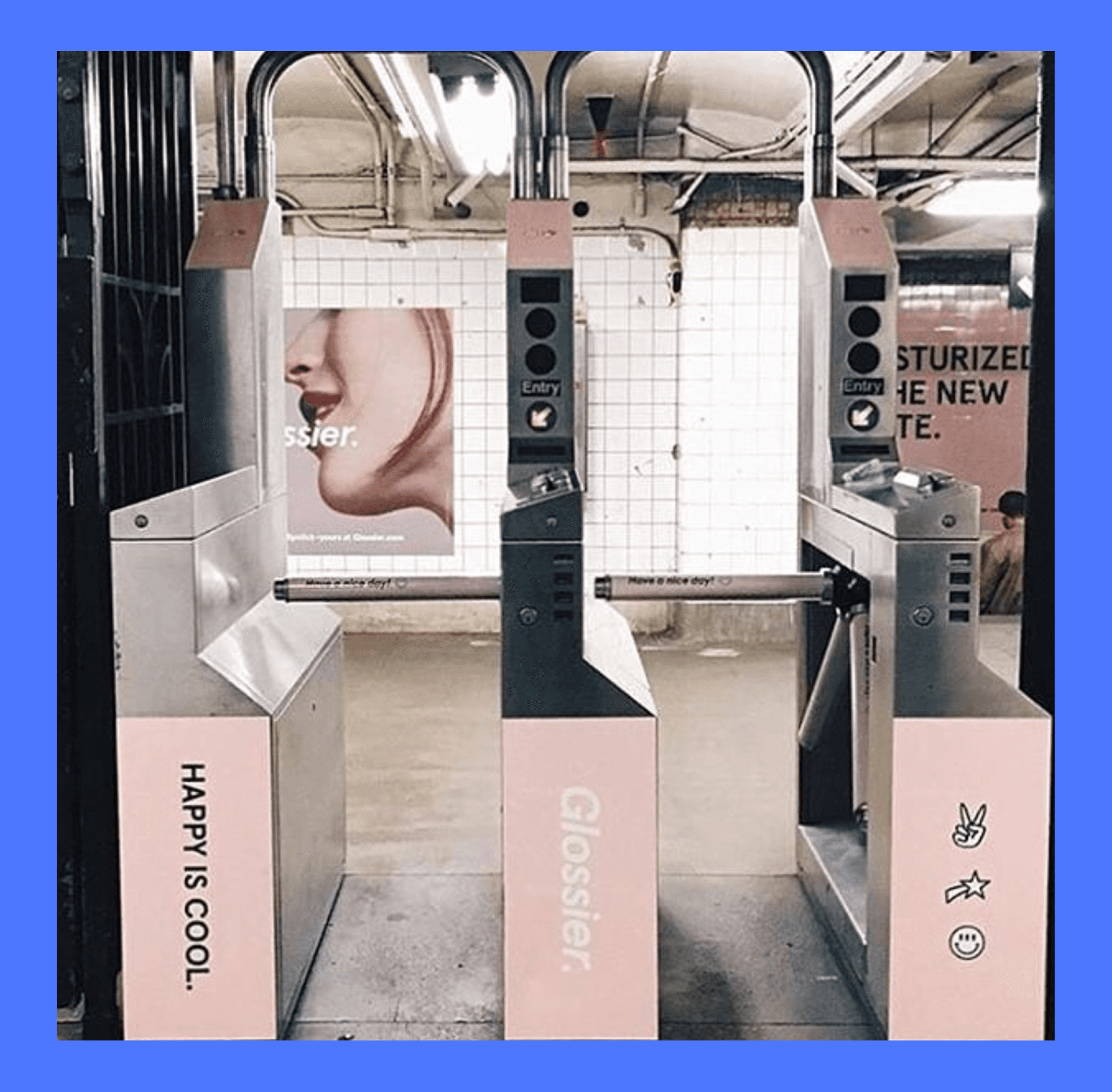
What helps the ad stand out is how integrated it is. Instead of placing a single poster on a wall, the brand uses multiple touchpoints that commuters pass through — the swipe gates, the bars, the sides of the machines. That repetition makes the branding hard to miss but doesn’t feel overwhelming, since everything stays within the same clean style.
The layout, colors, and clear branding make it a perfect “quick snap” for social. Even if that wasn’t the main goal, it adds value.
e.l.f. Judge Beauty
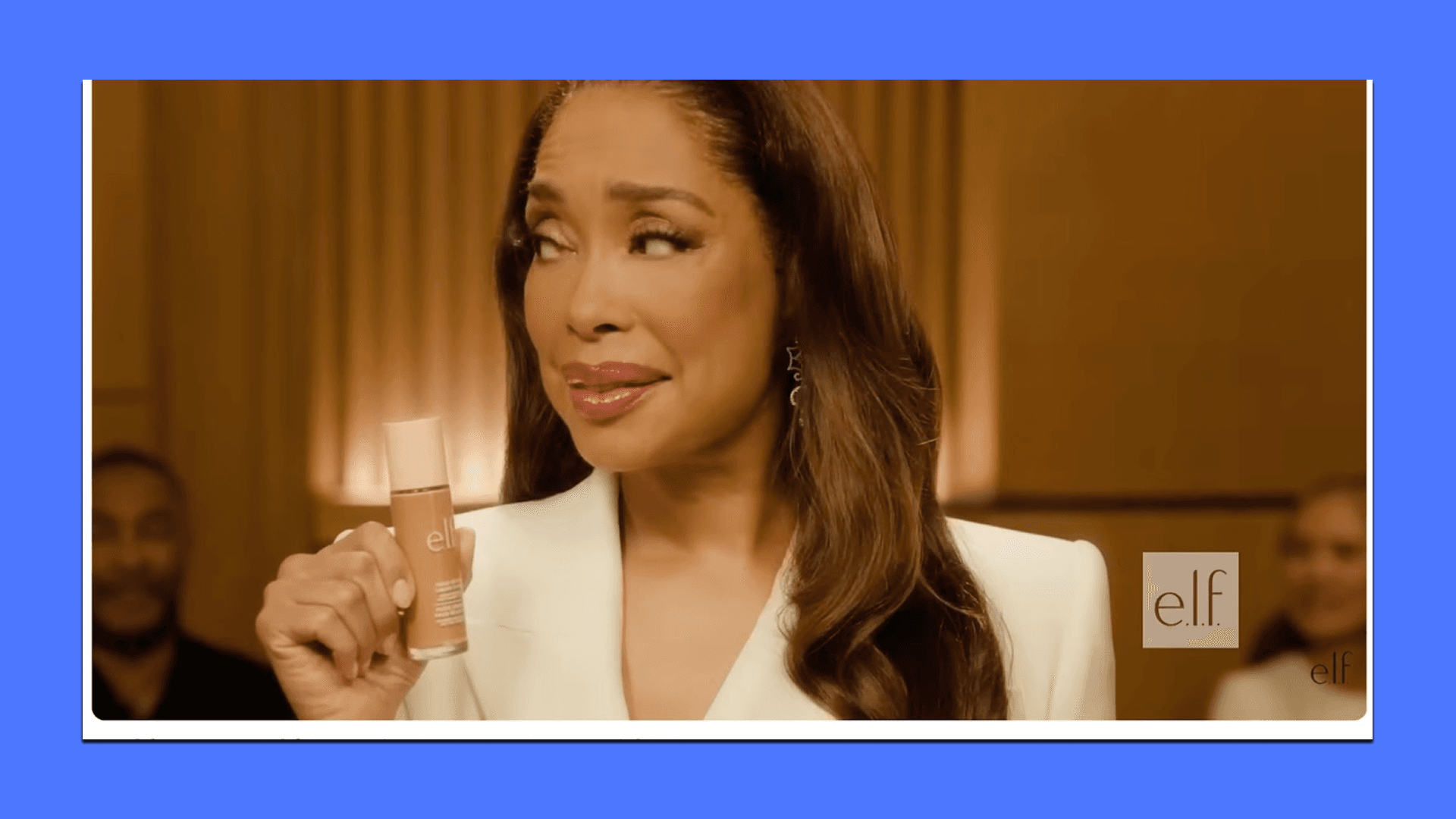
This ad works because it takes something pretty ordinary — comparing expensive makeup to affordable options — and turns it into a courtroom scene that’s actually entertaining to watch. Using familiar faces from Suits adds instant recognition, but the humor is what carries the spot. The script moves fast, mixing jokes about overpriced beauty products with quick, memorable lines that make the value message clear without sounding preachy.
Source
The setup is simple: one character is being “charged” with overspending on a luxury foundation, and the judge shuts down every excuse by pointing to e.l.f.’s $14 alternative. It’s playful, but it still delivers product information: glowy finish, cruelty-free, accessible pricing. The courtroom format helps break through scroll fatigue — it feels like a skit, not a typical beauty ad.
Overall, it’s fun, straightforward, and gets the point across: good makeup doesn’t have to cost $92.
Rare Beauty – Why It Works
This Rare Beauty ad focuses entirely on mood and message rather than product shots, and that’s what makes it stand out. The visuals are simple: a group of people with different faces, tones, and styles, all framed in soft light. Over that, the voiceover talks about the pressure to look a certain way and how the word “rare” gives people permission to show up as themselves.
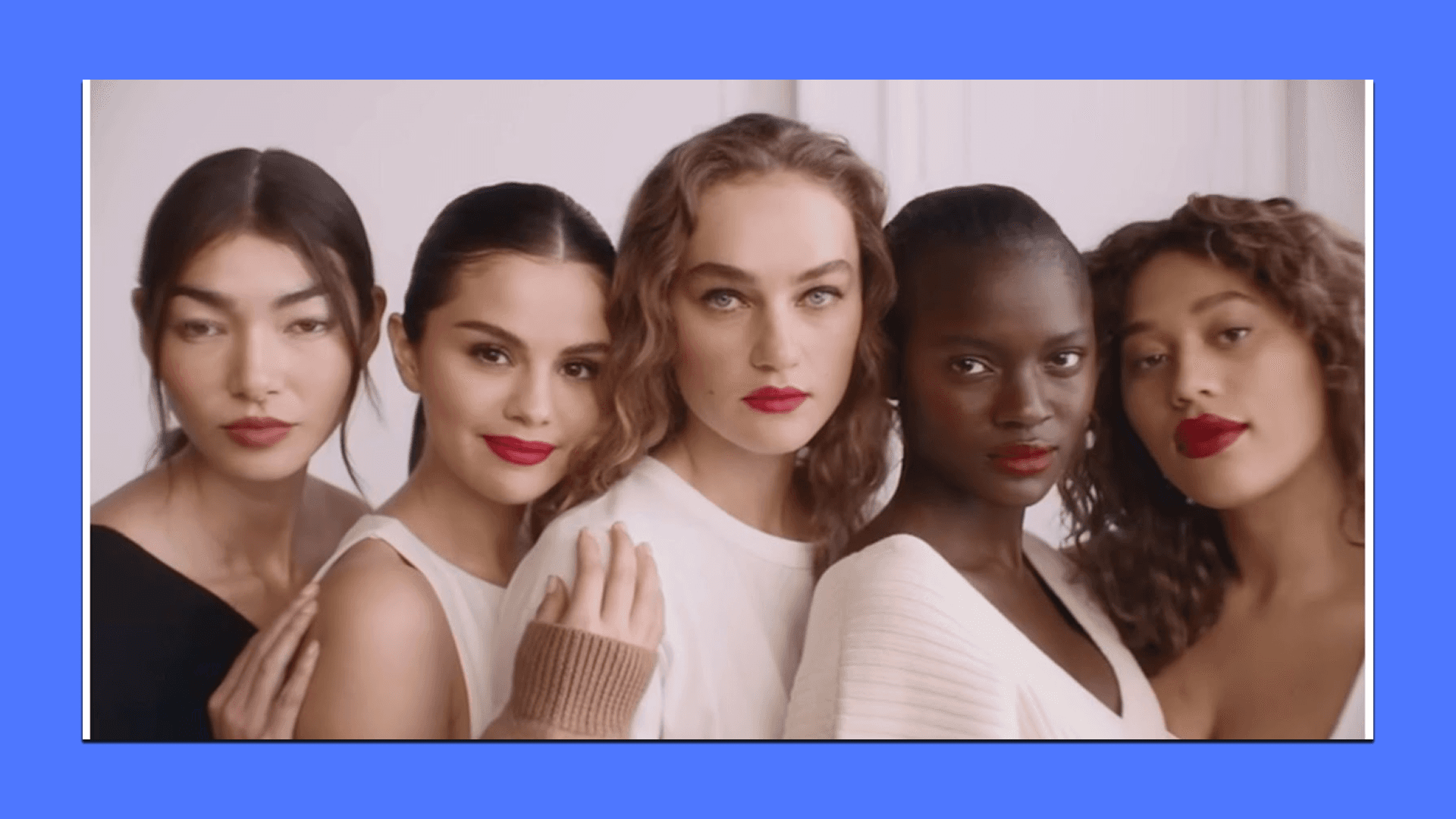
Nothing in the ad feels forced. The speakers share thoughts that sound personal and relatable — accepting who you are, being comfortable in your own skin, not needing to match a certain standard. The repetition of “I am rare” at the end ties the message together without making it feel like a slogan.
It’s a gentle spot, but effective. Instead of pushing a product benefit, Rare Beauty leans into identity and feeling, which fits the kind of community the brand is trying to build. The message is clear: makeup should support who you are, not change it.
Bath & Body Works Candle Day
This ad leans fully into the holiday mood and uses it to introduce a single product: the Fresh Balsam candle. Instead of a basic product shot, the spot builds a mini world around the scent — a festive train car, Christmas trees, lights, gifts, and a warm, bustling atmosphere. It feels like stepping into a holiday market, which instantly signals the seasonal drop.
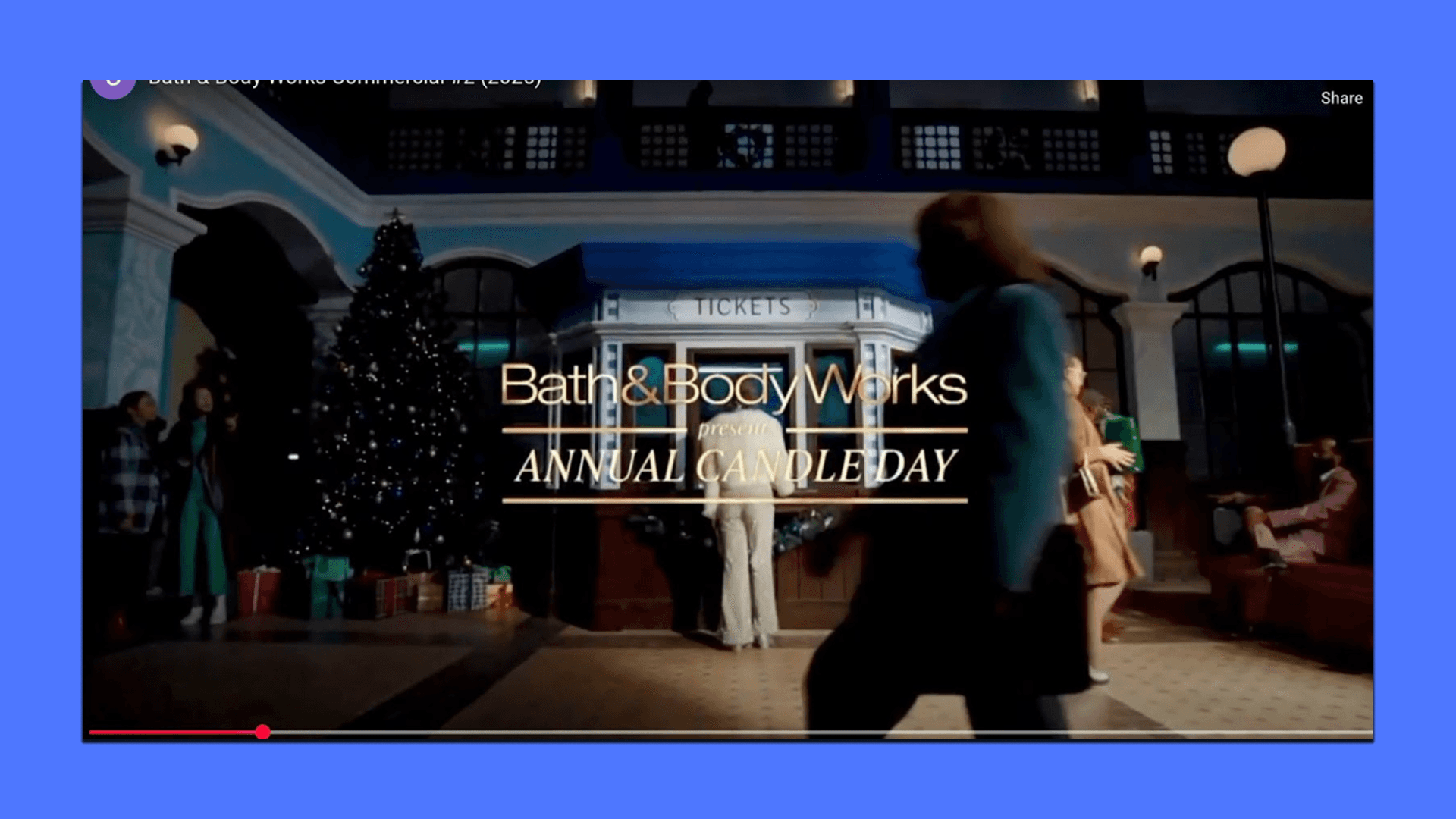
The storytelling is straightforward: people gather, shop, and move through a space that looks inviting and celebratory. The pacing is quick, but the visuals do most of the work. You understand in a few seconds that this is a limited-time moment, and that Candle Day is the event to show up for.
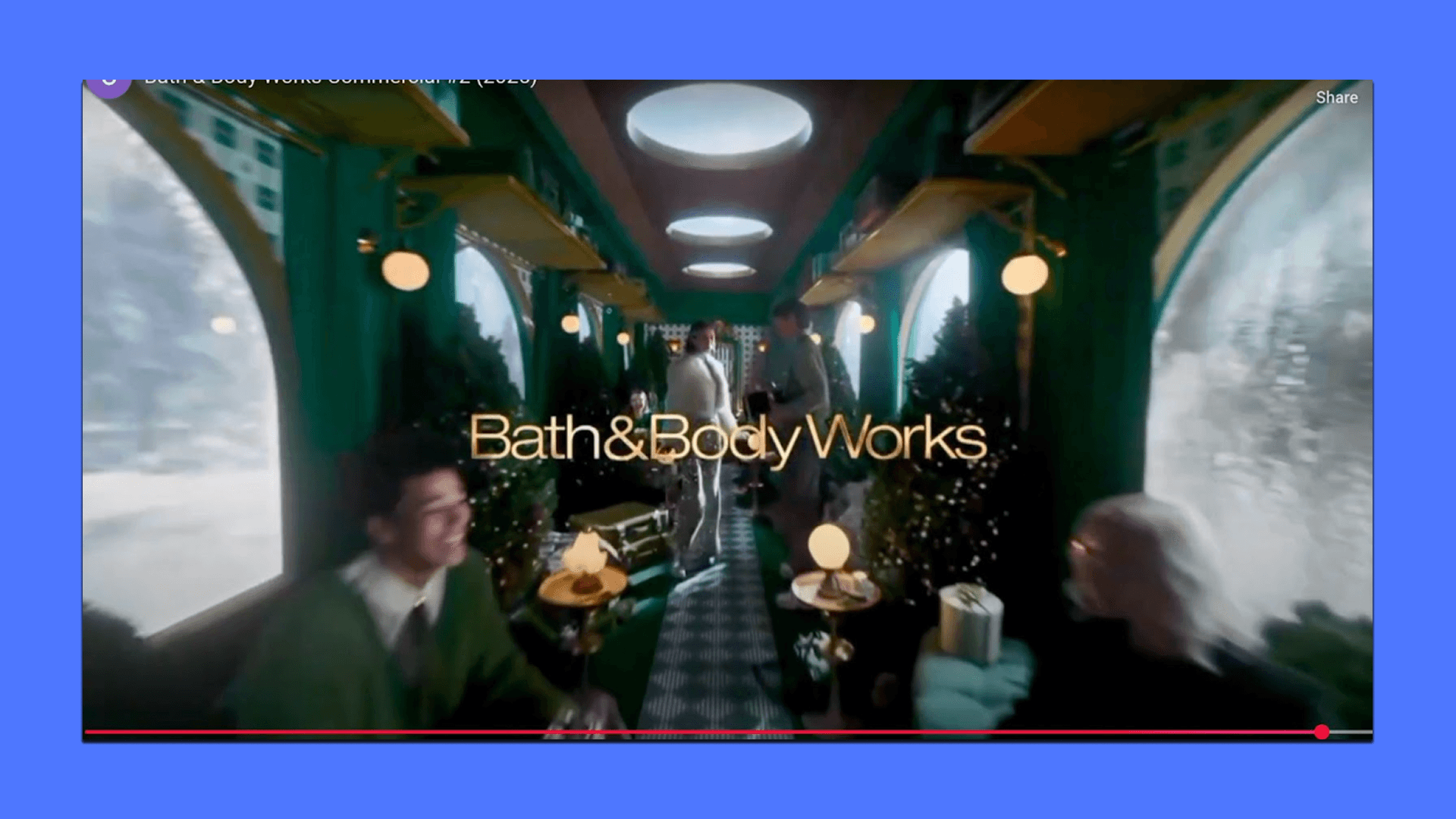
It works because the ad doesn’t overexplain. It uses setting, color, and energy to communicate everything — freshness, tradition, excitement, and a bit of nostalgia. A simple product message wrapped in a cozy, memorable scene.
How Brands Can Think About New Ad Ideas (Especially With AI)
Coming up with good ad ideas isn’t about chasing trends. It’s about finding angles that make your product easy to understand, easy to remember, and easy to talk about. AI doesn’t replace that thinking, but it makes the process faster and gives teams more room to explore.
A good starting point is to break your product into a few simple story directions:
The core benefit: What happens for someone after they use the product? Show the outcome clearly.
The real-life moment: Where does your product naturally fit in someone’s day? Build an ad around that moment.
The pressure or hesitation: Identify what people worry about — price, taste, texture, shade match — and answer it in a visual way.
The feeling: Some products sell better through mood than features. Lower the script and make the emotion the point.
AI helps you explore each direction more quickly. You can generate visual references, mock up scenes, test different hooks, and create multiple variations of the same idea without committing to full production. Instead of debating one concept for weeks, you can look at ten versions in a day and see what actually has energy.
A simple workflow can look like this:
Start with a clear problem or benefit.
Use AI to generate early moodboards or angles.
Pick the ideas that visually make sense.
Let human creatives shape them into real ads.
Use AI again to build variations and test new versions.
The result is a process that feels lighter and gives teams more chances to find something that clicks.
How Airpost Helps Beauty Brands Create Ads
Beauty brands have a unique challenge: customers want to see results, feel the experience, and trust the creator. That means a single ad isn’t enough — you need many variations, different angles, and constant testing to understand what actually moves people. Airpost gives teams a way to produce all of that without slowing down or adding layers of manual work.
With Airpost, you upload your brand assets, set your brief, and the engine starts generating a steady flow of new ad concepts — some focused on texture, some on before-and-after moments, some on lifestyle angles that don’t feel scripted. Check out some real examples of ads generated with Airpost.
You get to test more ideas without draining your production budget.
Where it really helps beauty teams:
Fast creative turnover: 10–100+ new ads weekly, so you can test more looks, hooks, and creators.
Your assets + AI + creative guidance: It's a hybrid system shaped by real strategists.
Easy revisions: Change the angle or message without rebuilding the whole shoot.
Consistent performance monitoring: Airpost watches what’s working and generates new variations automatically.
Talk to us today, and let us show you how Airpost makes it easier to explore more ideas and ship winning ads.