You could have the best product, the best offer, and the best creative team in your category. None of it matters if the first few seconds of your video ad don't stop someone mid-scroll.
People decide whether to keep watching or swipe past almost instantly. And when they do keep watching, everything downstream improves. They see your pitch. They hear your offer. They click. But it also triggers the ad platforms to show your video ad to a more relevant audience. Your reach goes up, and your cost per acquisition comes down. It all starts with the hook.
In this article, we'll break down what video hooks actually are, the different types that work, how to measure whether yours is landing, and what to do if it isn't.
What is a Video Hook, and Why is it Important?
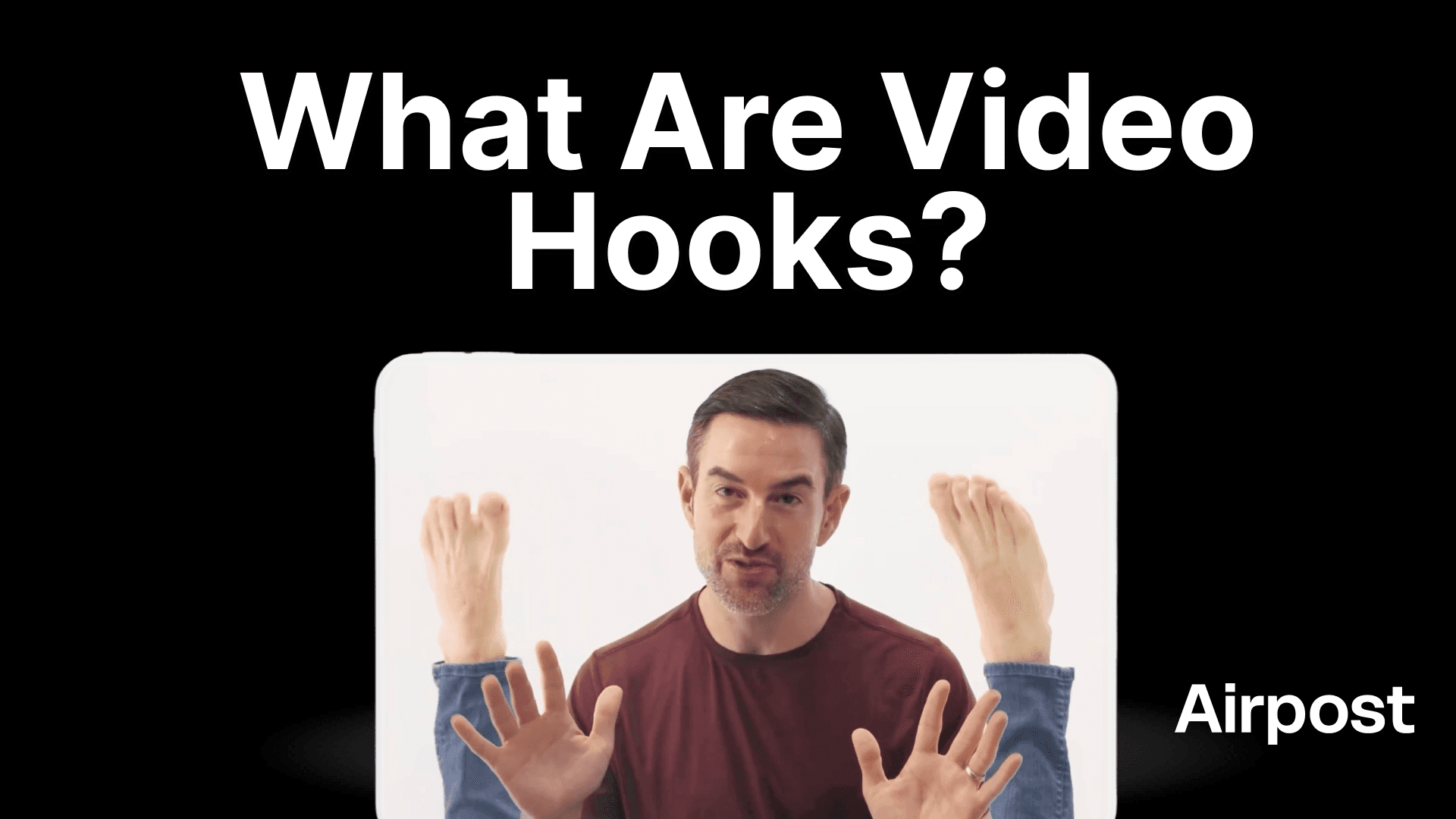
A video hook is the opening moment of a video ( typically the first 3–7 seconds) designed to immediately grab the viewer's attention and stop them from scrolling past or clicking away. It's especially important on platforms like TikTok, Instagram Reels, and YouTube Shorts, where users decide almost instantly whether to keep watching.
A strong video hook usually has multiple layers working together at once:
What's on screen visually,
What text overlay appears
What the person says (if anyone's speaking).
A video hook is important for a few key reasons:
Attention is scarce. People scroll through hundreds of pieces of content daily. You have roughly 1–3 seconds before someone decides to keep watching or move on. Without a strong hook, your content never gets seen, no matter how good the rest of it is.
It drives the algorithm. On platforms like TikTok, YouTube, and Instagram, the algorithm heavily weights watch time and retention. If viewers drop off in the first few seconds, the platform stops pushing your video to new people. A good hook keeps people watching, which signals the algorithm to show it to more viewers.
It sets the tone. The hook tells the viewer what they're about to get and why they should care. It creates a promise: entertainment, value, a story, that motivates them to stick around for the payoff.
It affects everything downstream. Even if your content is excellent, poor retention at the start means fewer views, less engagement, fewer followers, and less reach. The hook is like a gatekeeper for all the value that comes after it.
You can have the best video in the world, but if the first few seconds don't land, almost no one will ever see it.
The 4 Layers of a Video Hook
The best-performing video ads layer four things together in those first seconds.
1. Visual Hook (What People See)
This is the most immediate layer because the video is already playing before anyone reads text or hears audio. Motion, contrast, close-ups of faces, unexpected visuals, and fast cuts can all create a reason to stop scrolling. Faces are especially powerful because the human brain processes them almost instantly.
2. Text Hook (What's Written on Screen)
Many people scroll with their sound off, especially on Instagram and Facebook. Bold, high-contrast text on screen in the first second gives those viewers something to grab onto. Keep it short, specific, and tied to a problem or outcome the viewer cares about.
3. Verbal Hook (What's Said Out Loud)
If someone is speaking in the video, the first sentence needs to land immediately. No warm-ups, no "hey guys," no slow intros. The most effective verbal hooks either call out a specific audience, state a problem directly, or make a claim that creates curiosity.
4. Audio Hook (The Sound)
A sharp sound effect, a beat drop, a change in audio texture, or even a deliberate pause. These create a pattern interrupt that makes the brain pay attention. Even subtle audio cues can be the difference between someone pausing and someone scrolling right through.
When all four layers work together, the hook becomes much harder to ignore.
How to Measure if Your Hook is Working
The most important metric is your hook rate. On Meta, you can calculate it by looking at three-second video views divided by impressions. This tells you what percentage of people who saw your ad actually stopped to watch it.
A hook rate below 20% means most people are scrolling past without engaging. That's a sign your opening isn't doing its job. Anything above 30% is solid, and top-performing ads often hit 40% or higher.
But don't stop at hook rate alone.
You also want to look at your retention curve. It's the graph that shows where people drop off in your video. If there's a sharp drop right after the first three seconds, your hook might be doing its job, but the content that follows doesn't deliver on the promise. If the drop happens at the hook itself, you need to rework the opening.
The most useful thing you can do is test your hooks separately from the rest of the video. Keep the body of the ad the same and swap out only the first three seconds. Run two or three variations and let the data tell you which opening actually captures attention. This is how the best-performing ad accounts find their winners — not by guessing, but by isolating the variable that matters most and testing it over and over.
Video Hook Examples
Here are some real ads running right now, so let's see what hooks they use and what makes them work.
ClassPass Ad
The hook here is the real people, shown in a real studio, with a great background. It looks like a real workout video at first. That's what stops the scroll. People don't skip past content that feels like it belongs on their feed.
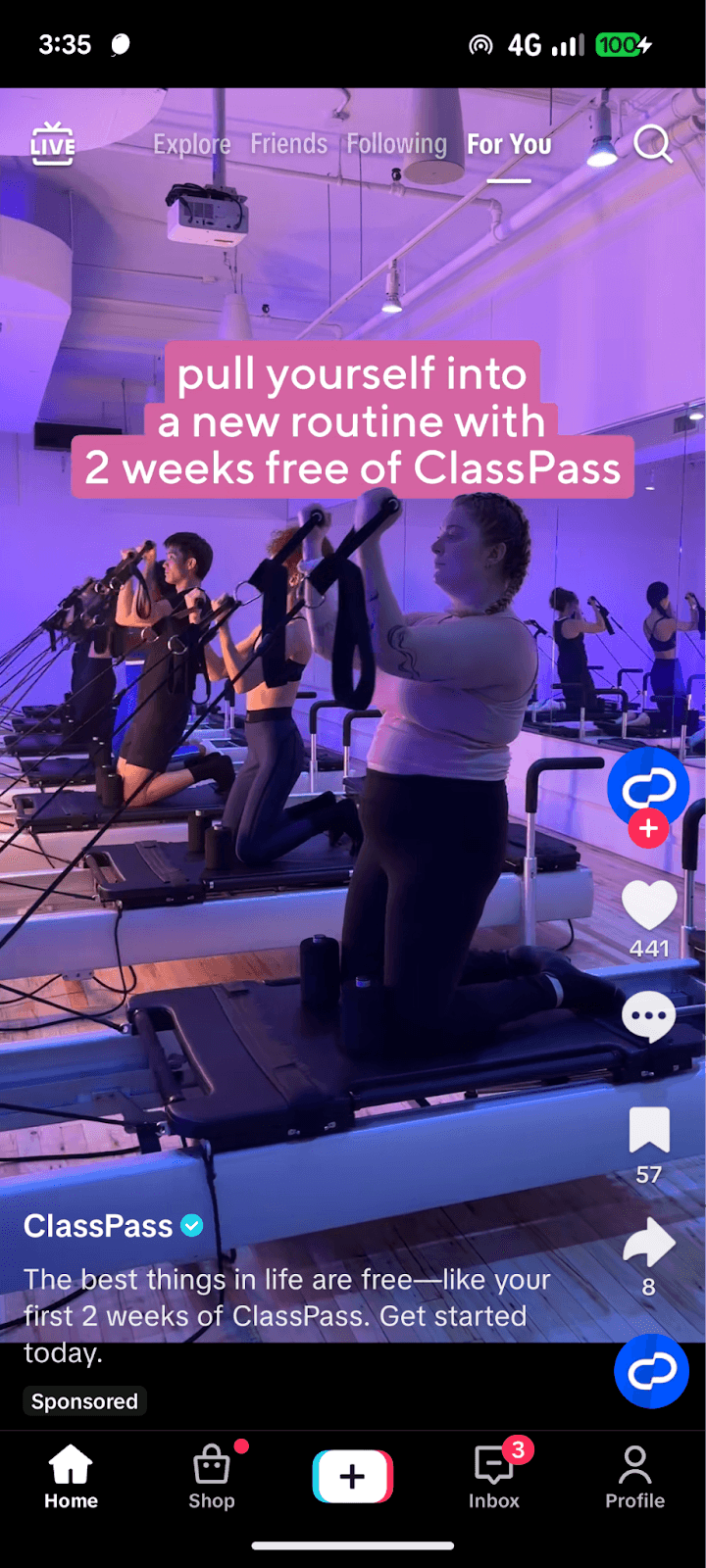
The text overlay says "pull yourself into a new routine" while the women are literally pulling on reformer straps. The visual and the copy match, which makes the whole thing feel cohesive instead of random text slapped on top of stock footage. The offer (2 weeks free) is also right there on the hook, so there's a reason to keep watching to know more about the offer.
DoorDash
The hook is a direct value promise to a specific audience. If you're someone thinking about earning extra money, "you have more opportunities to earn" speaks directly to you in the first second. You don't have to figure out if this ad is relevant to your life. It tells you immediately.
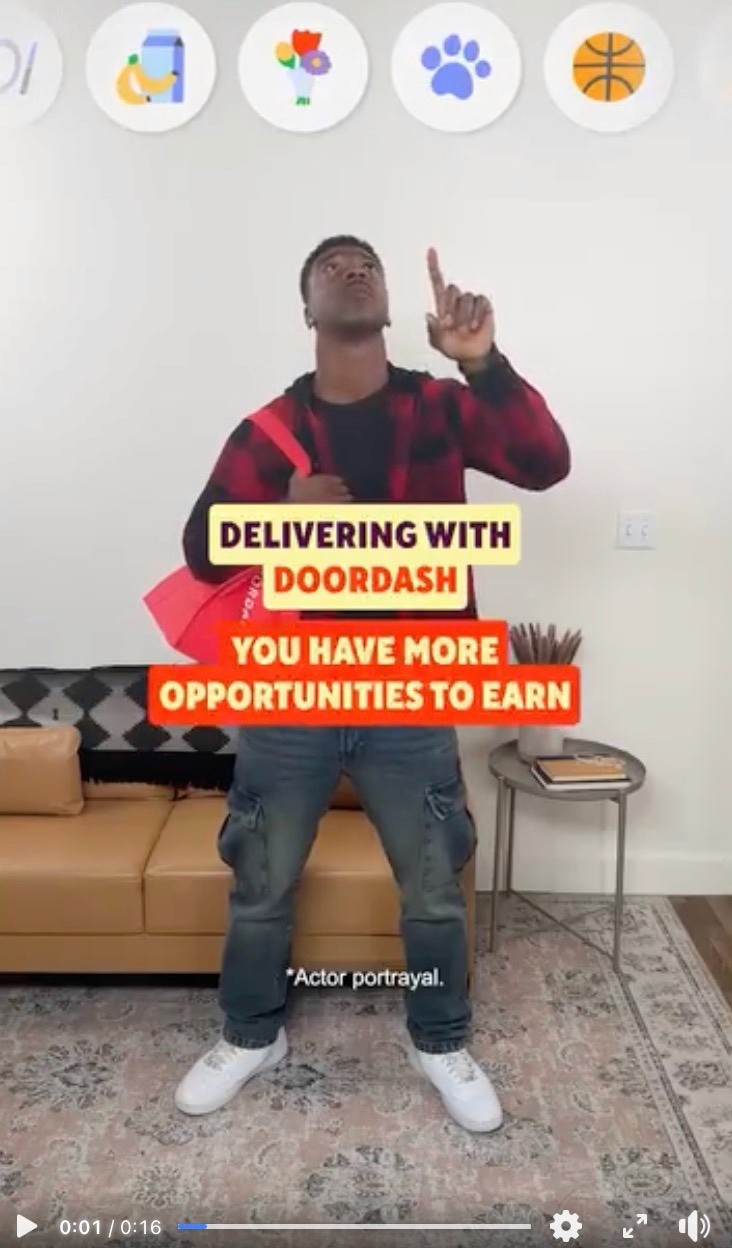
The pointing gesture and the category icons popping up above him also create a small "what are those" moment that makes you want to stay and see all the options.
DiscoverASR
The hook here is aspiration. You see two people jet skiing across bright blue water and your immediate reaction is "I want to do that." That's what stops the scroll. It's not selling you a beach or a city. It's selling you a feeling, and you feel it before you've even read a single word on screen.
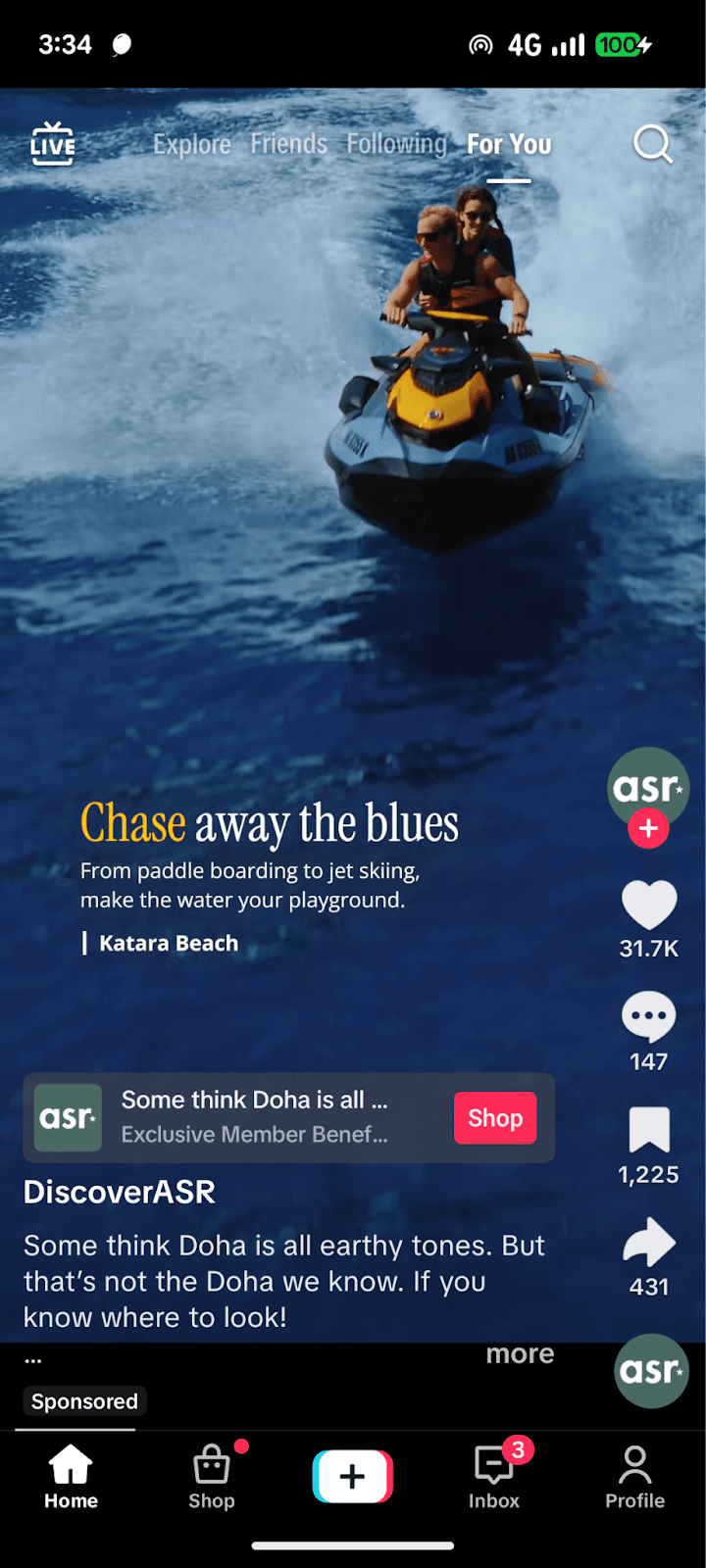
The caption adds a second hook on top. "Some think Doha is all earthy tones," challenges what most people assume about the place, which makes you curious to see what else there is. So you've got two reasons to keep watching: the visual pulls you in emotionally, and the copy pulls you in with a question you didn't know you had.
Create Winning Video Ads with Airpost
You know you need to test more hooks, more opening angles, more creative combinations. But your production pipeline can only move so fast. By the time you've briefed, reviewed, revised, and exported a handful of new ads, the ones already running have started to fatigue.
DIY AI tools help with speed, but they don't solve the strategy problem. They can generate videos, but they can't tell you which hook to test next, which audience angle is underperforming, or when to iterate on a winner versus kill it and move on. That part still requires people who understand how ad creatives work.
That's what Airpost is built for. It's a hybrid platform that combines AI orchestration with dedicated creative strategists to deliver ready-to-run video ads to your ad account every week.
Here's what you get:
10-30 new video ads per week. Not concepts or rough cuts. These are ready-to-launch ads built for Meta and TikTok, ready to launch.
Real footage, not just AI-generated visuals. Ads are built from a 350,000+ shot library of professionally produced footage, blended with your own assets and UGC.
A data-driven taxonomy system. Airpost tracks performance across hooks, angles, CTAs, and creative formats, so every new ad is informed by what's already working.
Creative strategists in the loop. You're not left figuring out prompts on your own. Dedicated strategists manage the output and make sure your ads are built for performance.
A living brief that adapts with you. Update your personas, angles, or value props, and your ads update with them. No restarting from scratch every time your strategy shifts.
Book a demo to see how Airpost fills your ad account with fresh, performance-ready creative every week without you writing a single brief.