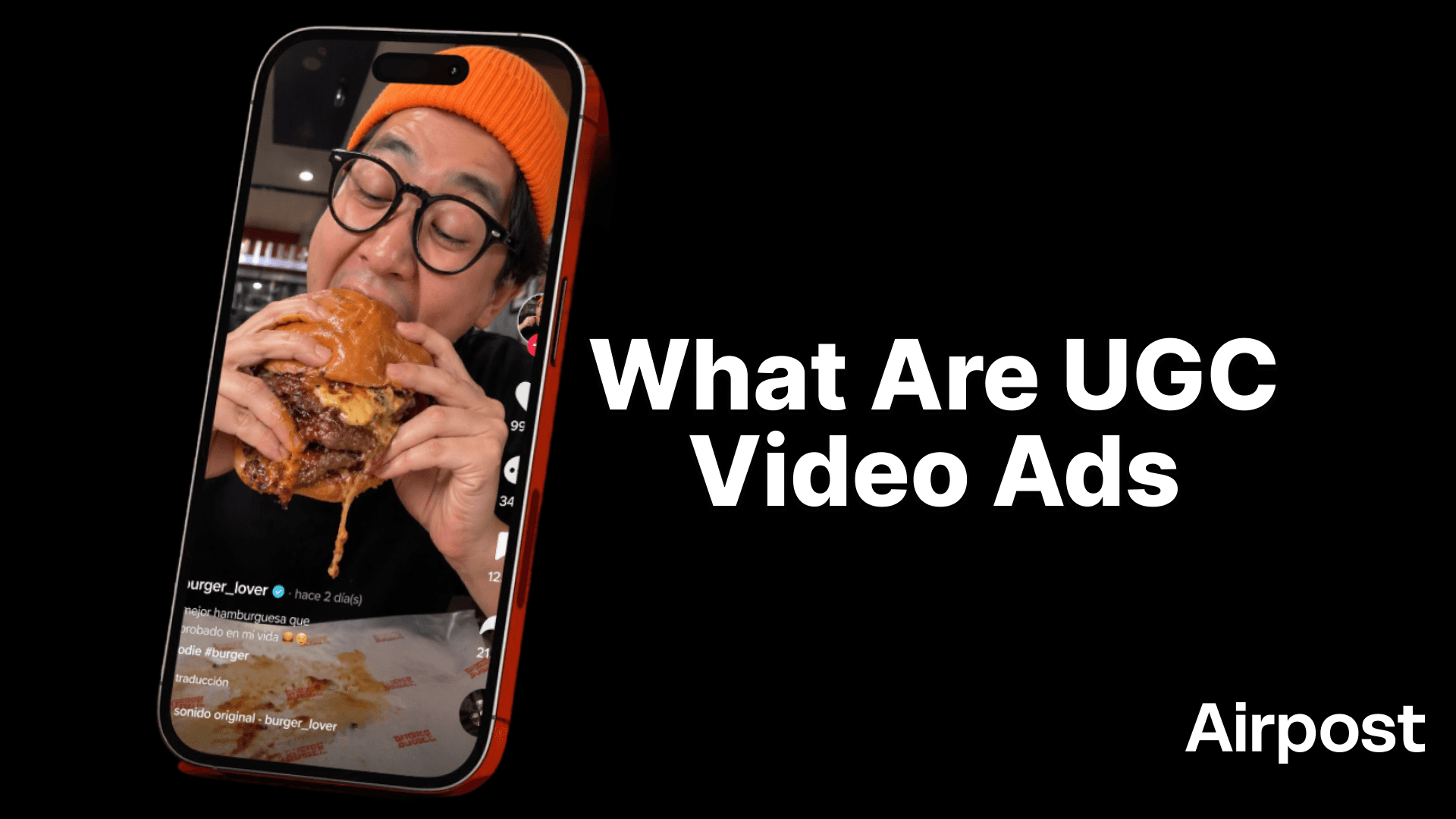
UGC stands for user-generated content. A UGC video ad is a video that looks like someone filmed it on their phone at home, in their car, or in their bathroom, not a polished commercial with studio lighting and scripted voiceover.
The term originally described content made by actual users, like someone posting a product review on TikTok. In advertising, it now includes content filmed by paid creators and even AI-generated footage designed to match the same casual, phone-shot look. What ties them together is the visual language, not who held the camera.
This article covers what UGC ads are, the different ways to produce them at volume, and how to use them to actually scale spend on Meta and TikTok.
What's the Difference Between a Produced Ad and a UGC Ad?
The difference is how the viewer processes them in the first two seconds of scrolling.
A produced ad is designed to look polished, and viewers register it as advertising immediately.
A UGC ad looks incidental. The viewer reads it as content before they read it as an ad, which is why it tends to hold attention longer in a feed full of organic posts.
Produced ads | UGC-style ads | |
Visual style | Art-directed product shots, controlled palette, designed layouts | Phone-shot footage, whatever lighting was in the room, natural style of talking |
Audio | Professional voiceover or studio-recorded sound | Phone mic, room tone, natural background noise |
Viewer reaction | "This is an ad." | "This is someone showing me something." |
Where it fits | Brand campaigns, TV, YouTube pre-roll | Meta feed, TikTok, Instagram Reels, paid social at scale |
Take Lovevery, the children's play kit brand. They run both brand-produced and user-generated ads on Meta.
Brand-produced ad:
This is made in-house. Yellow background, a customer quote styled in brand typography, a clean product shot of the Play Kit with items floating out of the box in neat circles.
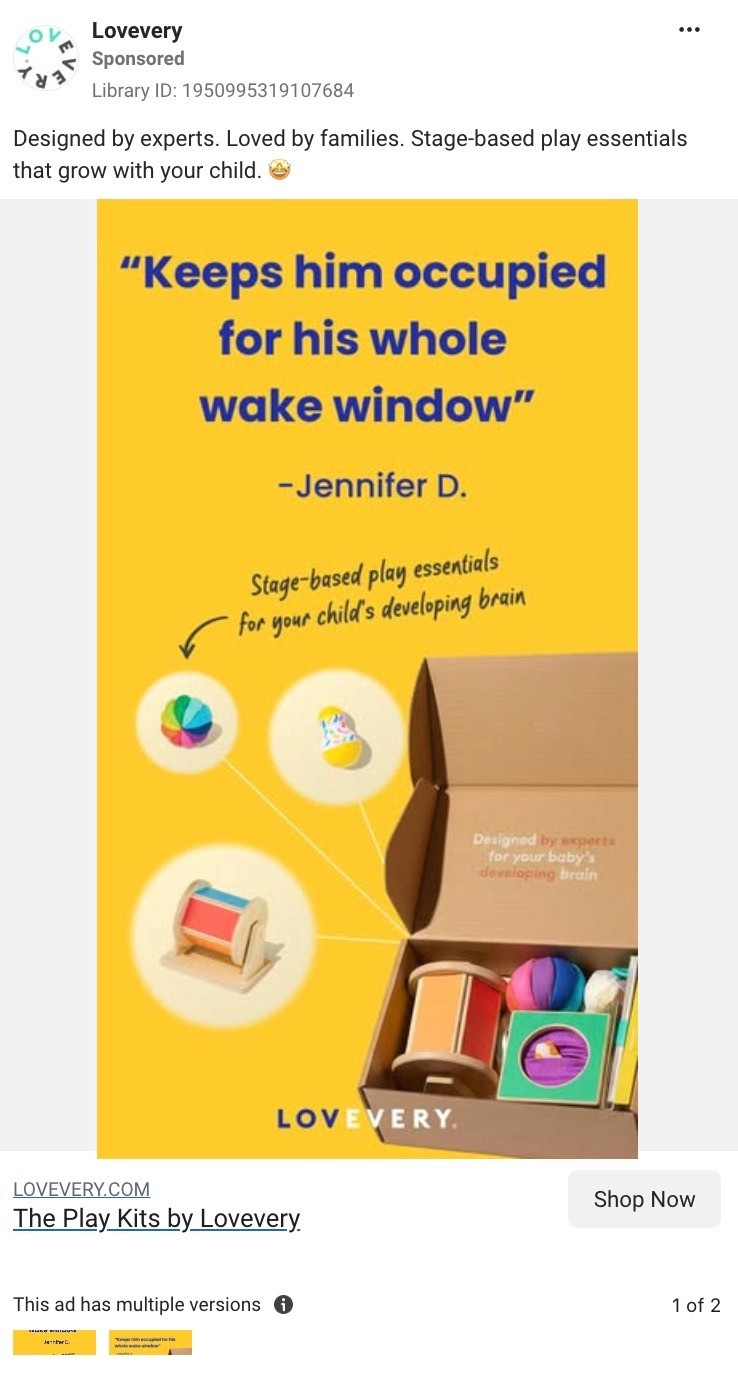
Every element is art-directed: controlled palette, intentional lighting, polished layout. You know quickly that it's an ad.
UGC ad:
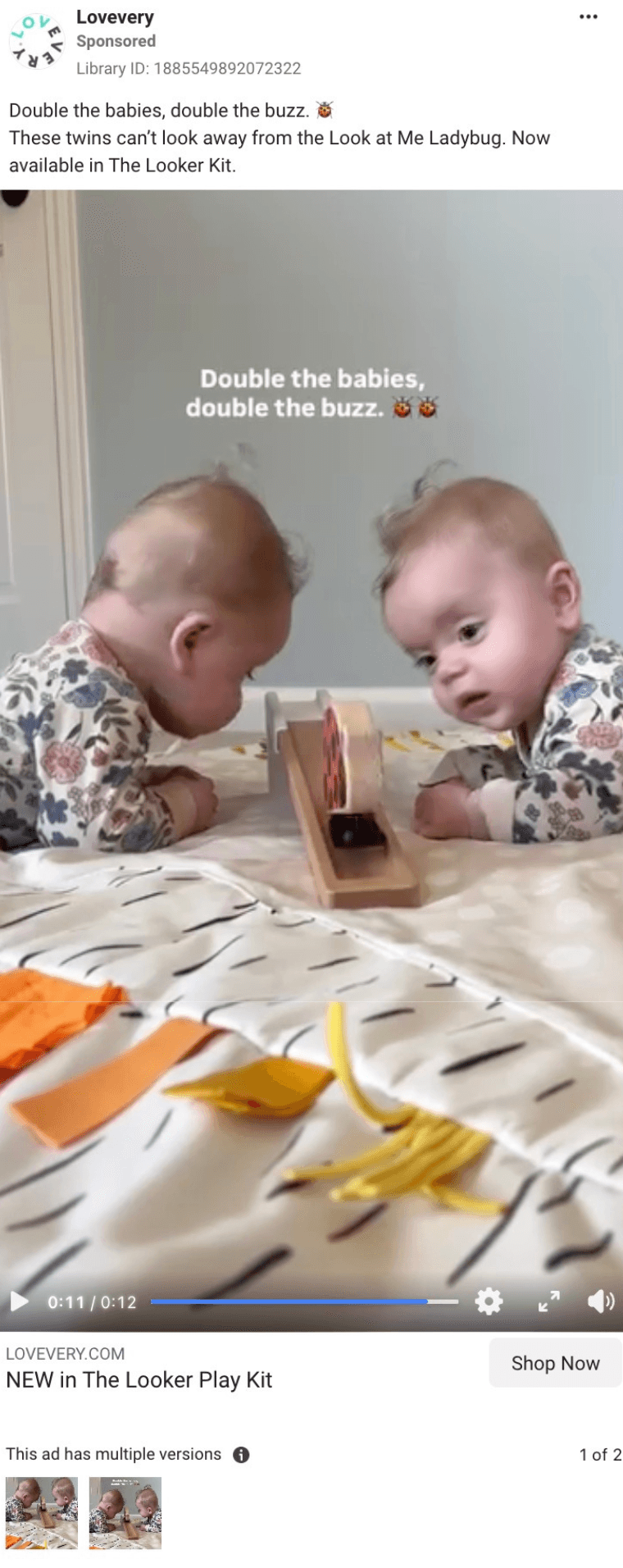
This is UGC. Two babies on a play mat, staring at a wooden ladybug toy. Low camera angle, natural window light, a simple white caption on top ("Double the babies, double the buzz"). It looks like a clip a parent would text to a group chat.
3 Ways to Use UGC Ads to Scale Paid Social
Producing UGC is the first half. Using it to actually grow spend is the second. Here are three approaches that separate accounts that keep scaling from accounts that stall after the first few winners.
1. Cover your audiences and angles, then keep refreshing
The biggest mistake teams make with UGC is producing a few ads aimed at one type of customer and running them until they burn out. Scaling means going wider from the start, then keeping the pipeline moving.
Map your audiences first. A skincare brand might be selling to:
People dealing with acne
People focused on anti-aging
People who just want a simpler routine
People switching from a competitor
Same product, four different hooks. Each one needs its own UGC.
Then vary the hook within each audience. For example, it can be a talking-head testimonial, or get-ready-with-me, or a quick product demo. Producing three hooks per audience gives you twelve ads from the start, not three.
And keep the pipeline running. Fresh content should be entering rotation every week, not every quarter. UGC ads decay fast on Meta, and the only way to keep an account scaling is to always have something new coming in before the winners burn out.
2. Test, learn, and double down on what works
Running a wide set of concepts is only useful if you're paying attention to what performs. After the first couple of weeks of a new batch, patterns start showing up in the data if you're watching for them.
Note what the winners have in common. It might be a specific type of creator, a particular angle, a hook style that keeps showing up, or a format like unboxings that consistently beats talking heads for your product.
Once you see the pattern, commission more of it:
Identify the winning pattern from the last batch
Brief new creators or concepts that match it
Run them alongside the original winner
Watch whether the pattern holds at higher spend
3. Run UGC across the full funnel, not just prospecting
Most brands only use UGC for cold audiences. It works there because it breaks the pattern of polished ads in the feed, but that's not the only place it belongs.
UGC performs in retargeting, too, where the job is different. You're not trying to grab attention; you're trying to close the loop on someone who already clicked, watched, or added to cart. That's where specific proof matters most.
Prospecting: pattern-breaking hooks, broad appeal, problem-focused openings.
Warm audiences: trust-building content, founder stories, behind-the-scenes.
Retargeting: objection-handling testimonials, before-and-afters, demos that answer the question the viewer didn't click through to find out.
What are the different ways to get UGC videos for your paid ads?
You can use some combination of the approaches below, depending on budget, volume, and how fast you need your ad creatives.
1. Source it from real customers
The most direct path is asking actual users to film themselves with your product. This usually happens through an ambassador program, a review incentive, or by reaching out to people who already posted about the brand organically.
The content feels believable because it is. It's also the cheapest source of UGC you can get. Most customer content costs nothing beyond a small incentive like a discount code, a free product, or a gift card.
But the problem is consistency with the format you want.
Some customers send clean vertical clips with decent light, others send a blurry horizontal video shot in a dark kitchen. They talk about the parts of the product that excited them, which may or may not be the angle you need to test next. And even when the content is good, the volume is low.
2. Hire UGC creators
The next step most brands take is working with creators. These are people who specialize in filming branded content from home, usually off a brief you provide, and they deliver a finished clip you can run as an ad.
Quality goes up right away. Creators know how to frame a shot, deliver a hook, and hit the messaging points in the brief. You can assign specific angles and personas and get content back that actually covers what you need.
Here's a platform showing different UGC creator profiles and their pricing.
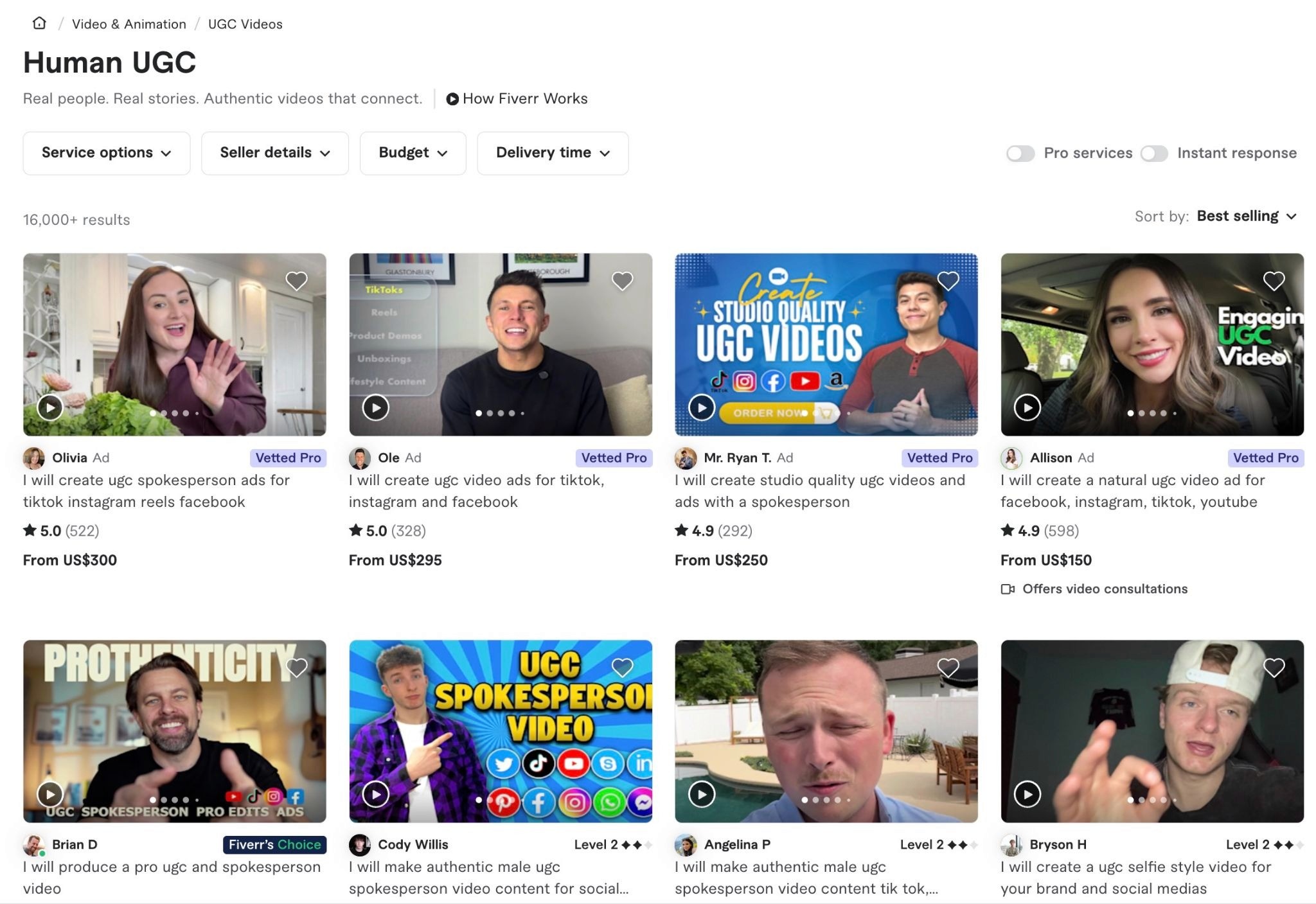
With so many profiles to sift through to find the right creator, and pricing ranging from a few hundred to a couple of thousand dollars for a set of UGC content, it's not a sustainable source of video ads. Most creators deliver raw or lightly edited footage. Someone on your team still has to cut it into hooks, add captions, resize for placements, and package it as a ready-to-run ad.
3. Use AI UGC tools
Self-serve UGC AI tools have become a popular way to generate videos. You pick an AI avatar, type in a script, and the tool generates a talking-head video that roughly looks like UGC.
The appeal is speed. You can generate a dozen variations in an afternoon for a fraction of what a creator would cost.
The quality is where it falls short.
Even the best avatars have something slightly off: stiff expressions, flat delivery, mouth movements that don't quite sync, eyes that don't track naturally. Viewers pick up on it even if they can't name what's wrong, and it breaks the illusion that the content is real. These tools also mostly produce talking heads, which misses a lot of what actually makes UGC work: product demos, reactions, b-roll, etc.
Each of these approaches solves one part of the problem and creates another problem. That's why the best option is to combine real footage for authenticity, AI tools for speed and analysis, and human judgment to decide what gets made.
But stitching all of that together yourself means juggling multiple tools, tracking what came from where, managing handoffs between creators and editors, and trying to keep a consistent strategy across all of it. The brands scaling UGC the fastest aren't doing that. They're using platforms like Airpost.
Scale Your UGC Ads With Airpost
Airpost is a hybrid creative platform that combines AI, real footage, and human creative strategists to deliver ready-to-run video ads every week. You get 10 to 30 vertical video ads delivered per week, in both 9:16 and 4:5 formats.
We blend your existing assets with a library of 350,000+ real production clips and AI-generated footage where it makes sense. There's a dedicated creative strategist who decides which angles to test, which winners to iterate on, and which concepts to retire.
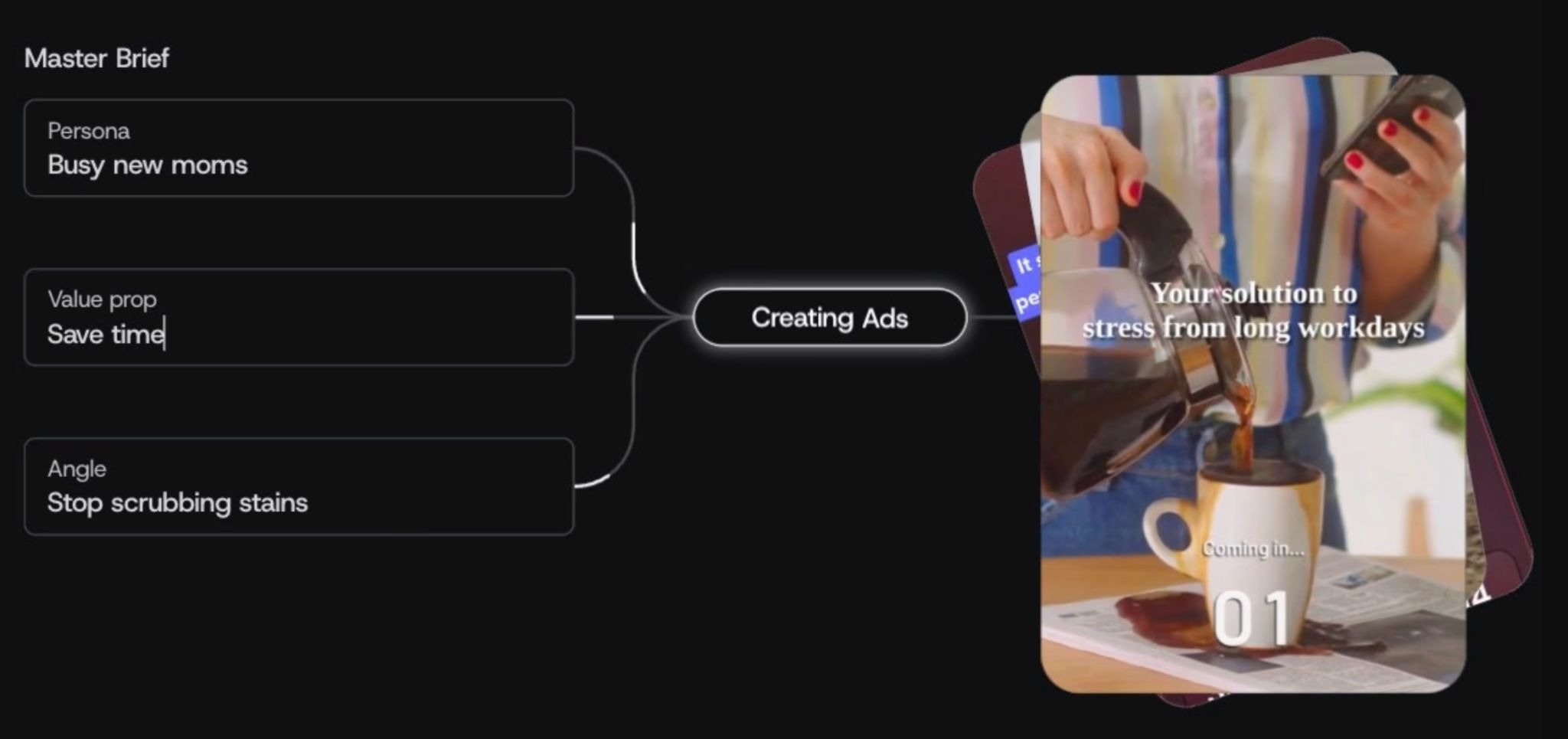
Your UGC video ads become scalable because every ad is categorized by angle, ICP, tactic, hook type, and creative format, so you always know what's been tested and where the gap is.
Your ad performance is tracked 24/7. When something starts working, new variations get triggered to extend its lifespan.
Book a demo with Airpost to see how you can leverage a system that keeps producing diverse, on-brand creative every week.