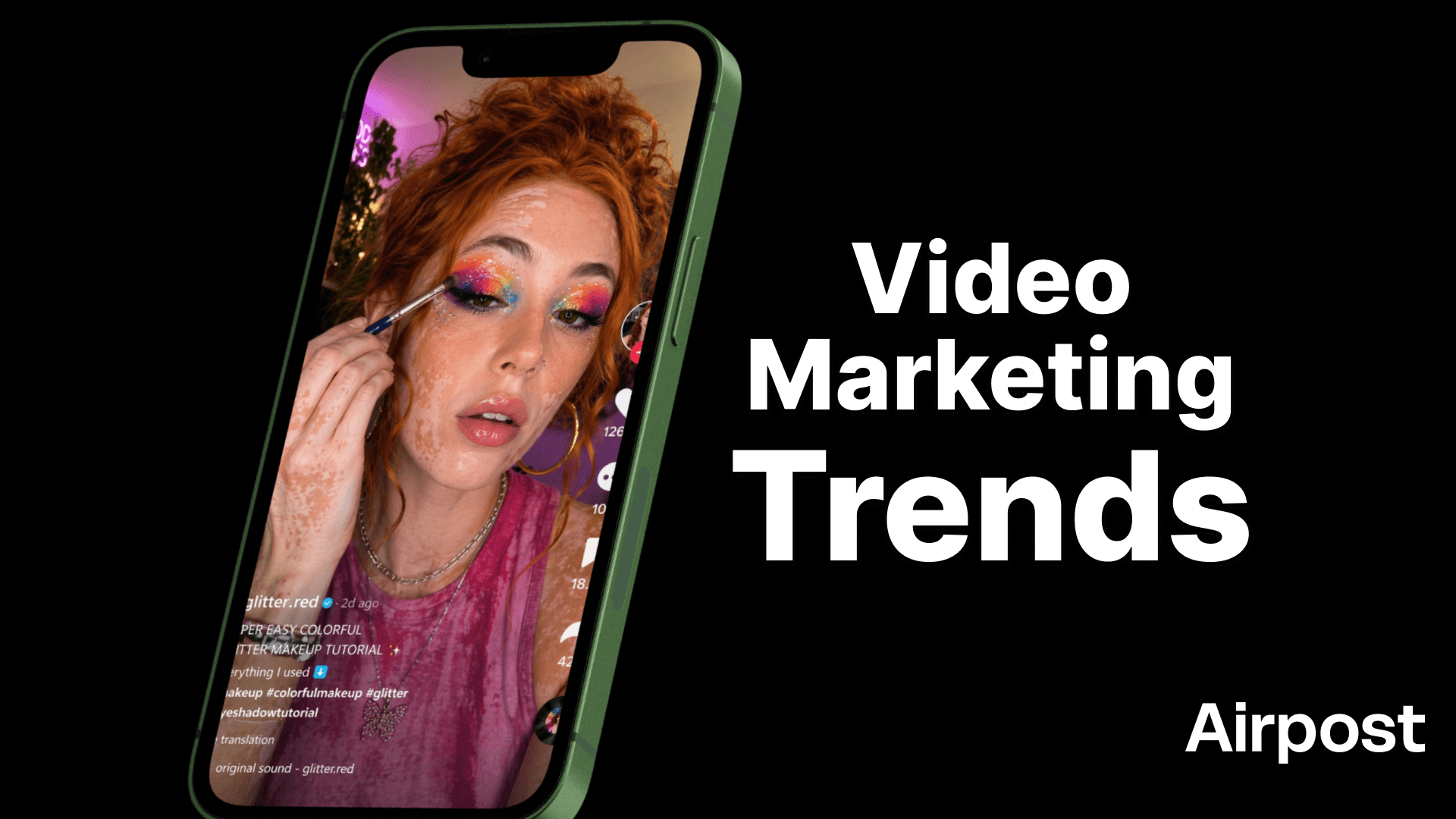
The economics of video production have collapsed because of AI, platform algorithms have quietly rewritten the rules of targeting, and audiences have gotten noticeably better at ignoring anything that feels like an ad.
If you're planning campaigns, running paid social, or just trying to figure out why your old playbook is underperforming, the trends below will explain most of it.
Here are the 12 video marketing trends defining 2026, ordered roughly from the biggest structural shifts down to specific tactical formats.
1. Algorithms Read Your Creative
The most consequential change of 2026 isn't a new ad format or a new platform. It's a rewiring of how ad platforms decide who sees what. AI-driven systems like Meta's Advantage+ and Google's Performance Max now analyze your creative asset directly, reading visual cues, audio, captions, and contextual signals to determine the right audience. The creative itself has become the targeting layer.
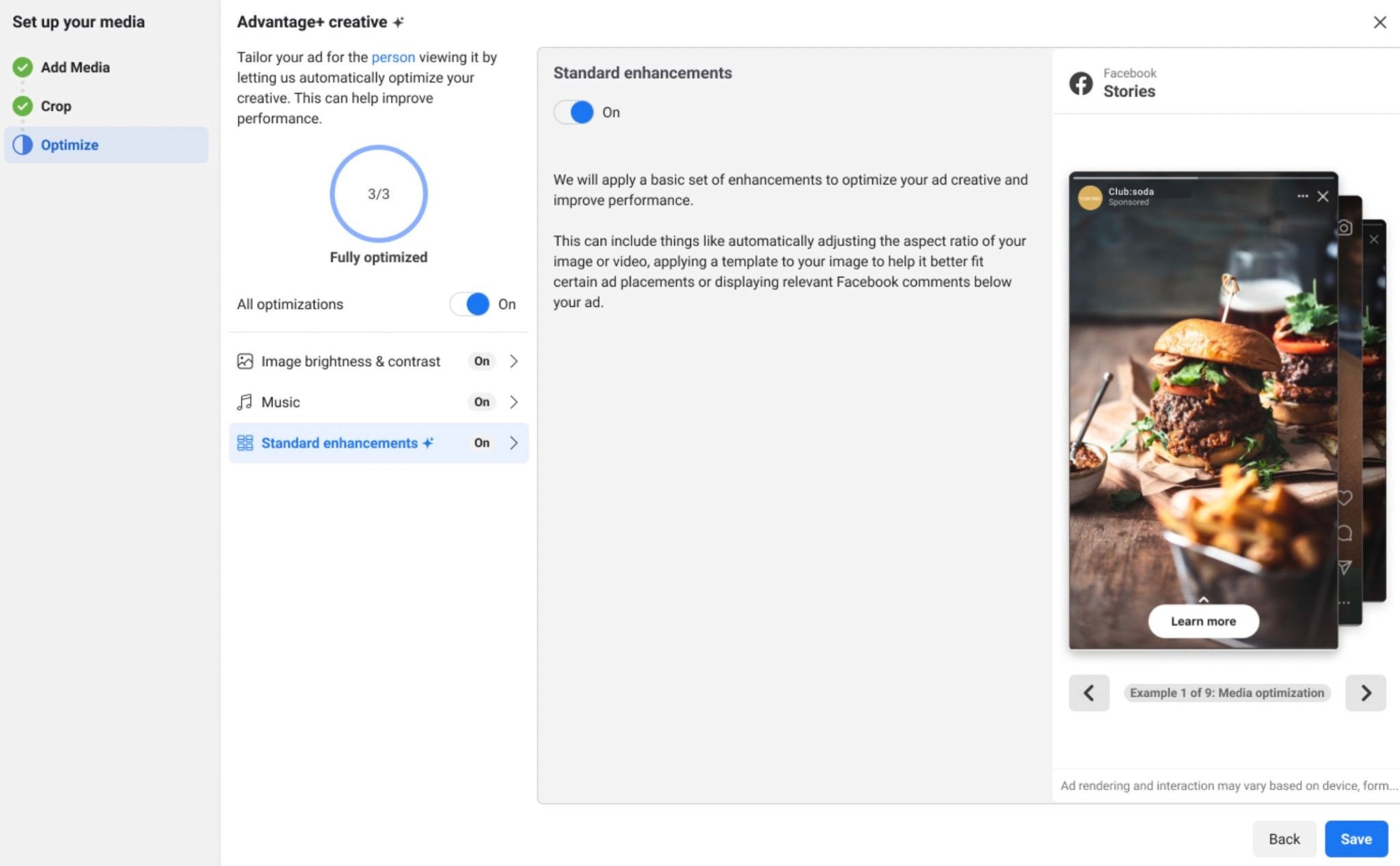
What this means in practice:
Manual interest-based targeting has lost most of its power. If you want to reach dog owners, showing a dog in frame works as much as selecting "pet lover" as an audience.
The creative needs to communicate intent both to the algorithm and to the human viewer.
The old era of hacking the algorithm is over. The algorithm is the audience now, and the only way to influence it is through the asset you upload.
Marketers who still spend 80% of their time inside targeting panels and 20% on creative are working backwards. The ratio has flipped.
2. AI-Generated Video Ads Going Mainstream
2026 is the year AI video generation stopped being a novelty and started showing up in real campaigns. AI models for generating videos now produce synchronized audio, 4K output, and phoneme-level lip-sync good enough to ship as paid ads. Tools have emerged that let you paste a product URL and get back a finished video ad in minutes. There are tools like Airpost that combine the best of AI and human judgment to give you winning ads.
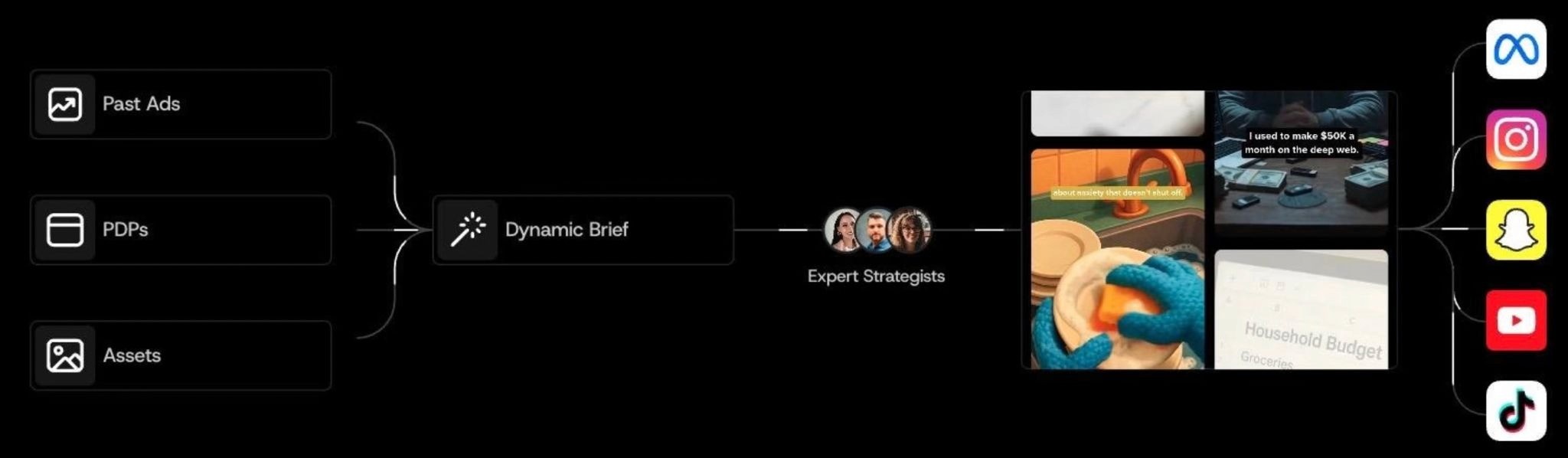
The cost of producing an ad variant has reduced, which is changing what production even means. The scarce resource is no longer cameras, crews, or editing time. The scarce resource is creative taste, the ability to write a brief the model can execute on, and the judgment to separate genuinely good output from AI slop that audiences will smell instantly.
The winners are the brands generating AI content that feels like a point of view rather than a template.
3. The Variant Factory
Because AI dropped production costs and platforms need creative volume to optimize, the winning workflow isn't "ship one great ad." You now have to ship more variants and let the system pick. A common framework gaining traction in 2026 is the 3×2×2 matrix: three hooks, two lengths, two calls to action, giving you twelve variants per concept.
This reframes creative as a testable input rather than a finished artwork. Teams are building internal variant factories where one master concept gets cut into dozens of versions, each targeting different audiences, placements, or funnel stages. The weekly cadence for a sharp team now looks like ship twelve, kill eight, scale four, and rebuild the losing ones with new hooks.
If you're still launching one ad and waiting to see what happens, you're capping your own ceiling. Performance today is a volume and iteration game as much as a creative one.
4. Short-Form Going Full-Funnel
Short-form video used to sit in the awareness bucket. That assumption is broken in 2026. With YouTube Shorts surpassing 200 billion daily views and Reels continuing to dominate in-app screen time, brands are using short-form as full-funnel performance drivers that influence consideration, conversion, and retention, all in the same feed.
The creative rules for making short-form actually perform have tightened:
The hook has to land inside the first 1.5 seconds, because that's when the viewer decides whether to keep watching or scroll.
Vertical framing is non-negotiable. Horizontal repurposing signals "this is an ad."
Pacing has to match the platform. TikTok pacing is faster than Reels pacing, which is faster than Shorts pacing.
The best-performing ads blend into the feed rather than interrupting it.
Entire purchase journeys now happen inside short-form, especially with native shop links. Treating Reels as a discovery channel only means leaving conversion on the table.
5. UGC as a Performance Asset
User-generated content in 2026 isn't about authentic vibes anymore. It's a core performance asset that many DTC brands budget for alongside paid media. The workflow now looks something like this: pay mid-tier creators for raw footage, license it for paid use, run it as Meta and TikTok ads, and measure it the same way you'd measure any performance creative.
The important distinction from influencer marketing: you're not buying the creator's audience. You're buying their style, their voice, and the format of the asset. A creator with 12,000 followers can produce a phone-shot product review that outperforms a $50,000 studio production when run as a paid ad, because it reads as a real recommendation rather than a commercial. UGC videos have effectively become the easiest ad format for DTC brands, with polished hero content reserved for specific funnel stages.
6. Shoppable Video and CTV Commerce
The living room became a checkout screen in 2026. Shoppable CTV (Connected TV) ads are now converting roughly 5X better than standard video ads and are projected to represent 10% of all connected TV ads by late 2026. YouTube rolled out shopping CTV ads across Performance Max, Demand Gen, and DV360, and Google reported that simply adding QR codes to TV ads increased conversions by more than 100%.
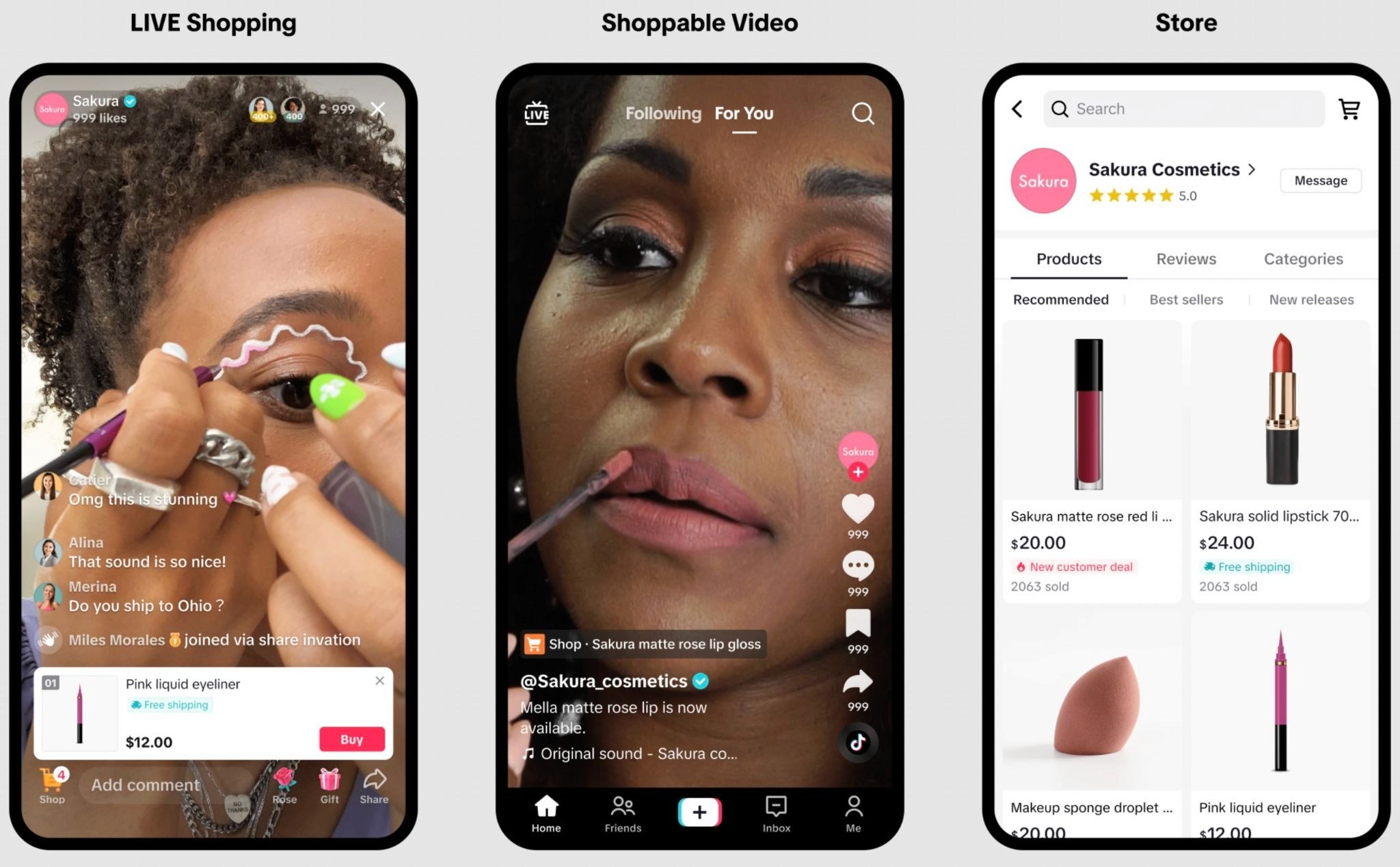
Video ad plays on the big screen or in-feed.
A QR code or tappable overlay pulls products live from the brand's catalog.
The viewer completes checkout on their phone within seconds.
Instagram Reels, TikTok Shop, and YouTube Shorts all support native in-video purchase now, which means the long-standing gap between "see it" and "buy it" has effectively closed. Video ad performance is increasingly being measured on transactions, not just views or completions.
7. Social Platforms as Search Engines
A generational shift in how people search has fully matured in 2026. Users are now use social scrolling as their primary discovery engine for brand research, outpacing traditional text-based search. When a Gen Z shopper wants to know which running shoes to buy, they search TikTok before they search Google.
This has created a new discipline called social SEO, where brands optimize videos to rank inside platform search rather than on the open web. Captions, on-screen text, hooks, spoken keywords, and hashtags now function the way meta descriptions and H1 tags once did. The change shows up in scripting: successful videos lead with the keyword or question in the first two seconds, because that's what the platform indexes and what the searcher is scanning for.
If you're a brand with a strong SEO presence on Google but no social search footprint, a growing slice of your discovery traffic is going to competitors who figured this out first.
8. Faceless Brand Content
One of the more overlooked shifts of 2026: not every successful video needs a charismatic on-camera creator. Faceless content, built from voiceover plus B-roll plus text overlays plus screen recordings, is exploding across TikTok, Instagram, YouTube Shorts, and paid social. Consumers now perceive faceless content as more authentic because it focuses on the message rather than the messenger, and Gen Z cares more about content quality than how popular the creator is, or whether they're showing their face or not.
Faceless content scales infinitely because it doesn't depend on talent scheduling, it costs less per video, and it removes key-person risk from a brand's content operation. More brands in 2026 are building faceless sub-brands that look and feel like independent media properties, detached from any single founder or employee. Done well, this gives a small team the output of a content studio without the coordination cost.
9. The Return of Long-Form as a Conversion Tool
Everyone talks about short-form dominance, so this one surprises people. Long-form video is quietly returning in 2026, specifically as a conversion tool for considered purchases. When a consumer is genuinely deciding between options, short clips aren't enough. They want the 15-minute founder interview, the 20-minute product deep-dive, the hour-long "how it's made" documentary. This is showing up most clearly in SaaS, premium DTC, and B2B, where the sale requires trust and detail that no 30-second ad can deliver.
The emerging playbook is a two-speed content system. Short-form does the discovery work and pulls strangers into the orbit. Long-form does the closing work and turns curious viewers into buyers. Smart brands are mapping their content accordingly, rather than treating every piece as the same format competing for the same attention.
10. Interactive and Choose-Your-Path Video
Interactive video finally became a real marketing format in 2026. Viewers can tap to pick a color, branch into a storyline, configure a product, or answer a poll mid-watch. On CTV, interactive spots are holding viewer attention for an average of 71 additional seconds compared to standard pre-roll, with engagement rates between 1.8% and 3.5%. Instagram and TikTok are rolling out more native interactive overlays every quarter.
For marketers, interactive video solves a real problem. Passive video is easy to scroll past. A video that asks for input earns attention, surfaces preference data, and self-qualifies the viewer before the checkout step. The brands getting the most out of it are using interactivity to do product discovery inside the ad itself, so the viewer arrives at the landing page already knowing what they want.
How Airpost Helps You Keep Up With Every Trend on This List
Every trend in this list points to the same underlying shift. The brands winning in 2026 are the ones producing more creative, testing more variants, and moving faster than their approval chains used to allow.
That's exactly what Airpost is built for.
Airpost is a hybrid AI and human creative platform that delivers vertical video ads at scale for performance marketers, primarily running campaigns on Meta and TikTok.
It delivers 10–30 new video ads per week, drawn from a combination of your brand footage, a library of 300,000+ real clips, and AI-generated assets built specifically for your account. A master brief updates automatically as performance data comes in, so the creative stays aligned with what's actually working rather than what was working three months ago. When an ad starts hitting, 24/7 performance monitoring triggers new concepts built around that winner.
What separates Airpost from self-serve AI tools is the taxonomy underneath it.
Every ad is structured using a proprietary framework that categorizes creative by angle, ICP, tactic, and format. That structure allows the engine to identify gaps, avoid redundant variants, and give Meta's algorithm genuinely distinct concepts to optimize against rather than minor tweaks of the same idea.
If your 2026 video strategy is sound but your production pipeline is the bottleneck, book a demo with Airpost.